
How to Fix a Flat Tire Safely on Your Car
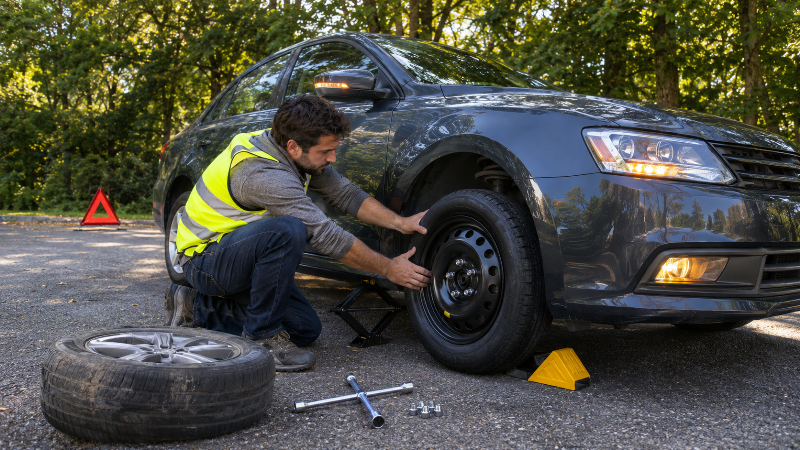
How to Fix a Flat Tire Safely on Your Car – A sudden puncture can interrupt a journey, but knowing how to fix a flat tire helps you respond safely. The priority is finding a secure stopping place before reaching for your jack or repair kit.
Follow these steps to handle a damaged tire and decide when professional assistance is necessary.
First, Stop Somewhere Safe
If a tire loses pressure while driving, hold the steering wheel firmly and slow down gradually. Avoid abrupt braking, signal when appropriate, and move away from moving traffic.
Park on firm, level ground, switch on your hazard lights, and apply the parking brake. Select Park in an automatic vehicle or the appropriate gear in a manual vehicle.
Do not change a wheel on a narrow shoulder, steep slope, or unstable surface. When the location is unsafe, call roadside assistance instead.
Tools Needed to Change a Flat Tire
Many vehicles include a jack, lug wrench, and spare wheel, although some provide only an inflation kit. Check your owner’s manual for the correct equipment and designated jacking points.
Helpful items to keep in your vehicle include:
- Spare tire: A roadworthy replacement with the correct inflation pressure.
- Wheel chocks: To reduce the risk of rolling.
- Tire pressure gauge: For checking inflation levels.
- Portable air compressor: For inflating a tire when appropriate.
- Flashlight and reflective vest: For poor visibility.
- Torque wrench: For tightening wheel nuts correctly.
How to Replace a Flat Tire With a Spare
Step 1: Loosen the Lug Nuts
With the car parked securely, loosen each lug nut slightly while the wheel remains on the ground. Do not remove the nuts yet, because the wheel must remain attached until the vehicle is lifted.
Step 2: Position the Jack Correctly
Place the jack only beneath the lifting point specified by the manufacturer. Raise the car until the damaged wheel clears the ground, then remove the nuts and wheel.
Never crawl beneath a vehicle supported solely by a jack. If stable lifting conditions are unavailable, stop and request professional help.
Step 3: Fit the Spare Wheel
Examine the spare for visible damage and check its pressure before installation. Align the wheel with the hub or studs, then start threading the nuts by hand.
Step 4: Lower and Tighten
Lower the vehicle carefully until it is stable on the ground. Tighten the lug nuts in a crisscross pattern, using the torque specified in your owner’s manual.
Step 5: Drive Carefully to a Tire Shop
Temporary compact spares are intended for short-term emergency use. Many have a maximum speed of 50 mph (80 km/h), but the tire’s markings and vehicle manual take priority.
Avoid sharp turns, sudden braking, and unnecessary high-speed travel. Arrange inspection or replacement of the original tire promptly.
Can You Repair a Puncture Without a Spare?
A nail or small piece of metal may cause a slow leak through the tire tread. Technicians can locate a puncture by inspecting the surface or checking for bubbles with soapy water.
Avoid pulling out an embedded object while stranded beside traffic. Removing it may cause pressure to escape faster, making the vehicle harder to move safely.
If your vehicle includes an emergency inflator or sealant, follow its instructions exactly. Such products can sometimes help you reach service, but they are not a permanent repair.
Proper tire repair requires removing the tire from its wheel and inspecting its interior. Industry guidance calls for both a puncture-filling stem and an internal patch; an external plug alone is insufficient.
After any emergency inflation, check pressure and watch for continuing air loss. If pressure drops rapidly, do not continue driving.
When Must a Damaged Tire Be Replaced?
Some punctures can be repaired, but only after professional assessment. Industry recommendations generally limit repairs to tread-area holes no larger than ¼ inch (6 mm).
Sidewall damage, shoulder punctures, overlapping repairs, or significant internal damage can make a tire unsafe. Driving on a severely deflated tire may also cause hidden structural damage.
Frequently Asked Questions
Can I drive on a flat tire?
Ordinary tires should not be driven when substantially deflated. Stop safely to avoid damaging the tire structure or wheel.
Is a tire plug a permanent repair?
No, a plug inserted from the outside does not meet recommended permanent-repair procedures. Qualified technicians must inspect the interior and use an approved combination repair.
How far can I drive on a temporary spare?
Distance limits vary by tire type and manufacturer. Follow the instructions on the spare and drive only as needed to obtain service.
Final Tips for Safer Roadside Repairs
Before your next journey, inspect tire pressure, spare condition, and emergency supplies. A few minutes of preparation can make roadside decisions much easier.








Comments (0)